
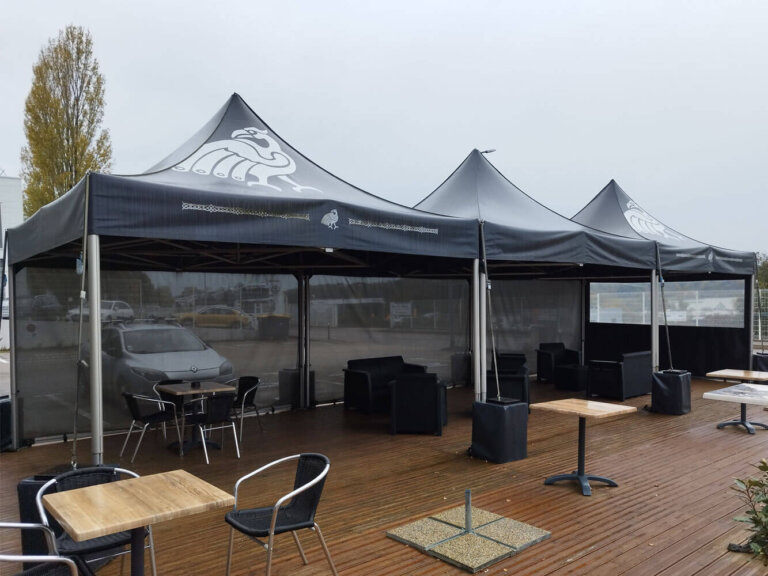
The ballast depends primarily on the wind
The first criterion to consider is wind strength. The stronger the wind, the greater the pressure exerted on the gazebo . This pressure also varies depending on the surface area exposed: a gazebo open on four sides does not react in the same way as a folding tent equipped with side walls.
To provide clear reference points, Vitabri relies on the Beaufort scale, which allows a wind speed to be associated with visible effects on the environment: smoke, leaves, flags, branches, moving trees…
These guidelines allow you to adjust the weighting of the tent to the actual conditions observed on site. They do not replace a complete analysis of the setup, but they provide a concrete basis for decision-making before erecting or maintaining an outdoor stand.
Why does a gazebo with walls require more weight?
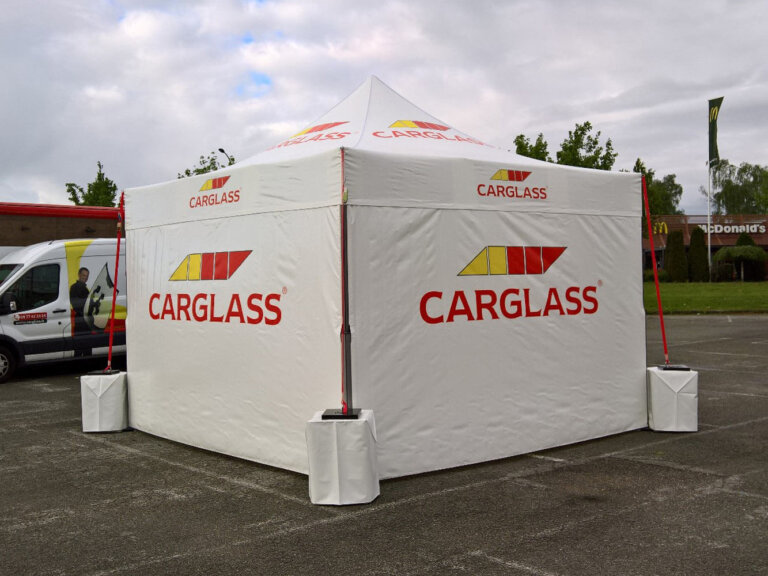
A professional gazebo equipped with walls offers better protection against rain and cold. However, these elements also increase wind resistance.
A closed folding tent acts more like a solid surface. The wind no longer passes through the structure as easily: it pushes against the walls, creating additional stress on the frame, threshold bars, and anchor points. This is why configurations with walls require more weighting in stronger winds.
For example, for a V3 3×3 CTS stand with a Beaufort force of 8, the minimum weight increases from 420 kg without walls to 560 kg with walls. This difference is due to the added weight on the threshold bar.
Before each installation, a simple question must be asked: will the tent be open, partially closed or completely closed? This answer directly changes the level of security required.
Ballasting, staking, guying: what are the differences?
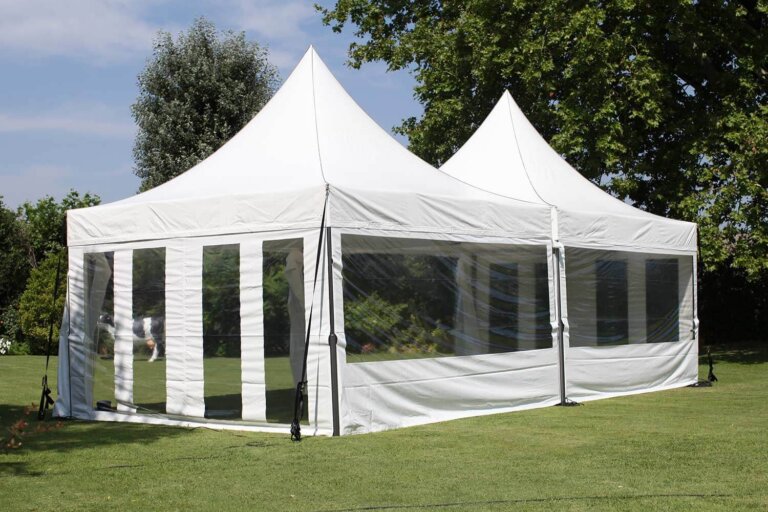
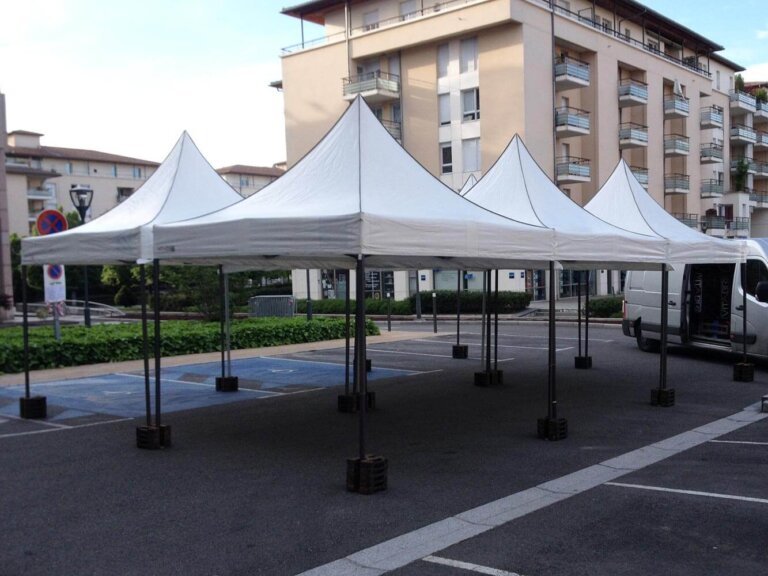
Ballasting involves adding weights to the legs of the tent to stabilize the structure when the ground does not allow for direct anchoring. This is often the case in parking lots, market squares, concrete slabs, urban areas, or event sites where drilling or driving stakes into the ground is prohibited.
Staking allows the posts to be fixed directly into the ground using suitable stakes. This method is suitable for soft ground, provided the soil offers sufficient resistance to pull-out.
External guying completes the anchoring by connecting the structure to the ground using taut straps or ropes. It becomes essential as soon as the wind increases, particularly at heights where the tent begins to experience significant lateral pressure.
Finally, permanent ground anchoring provides a durable anchoring solution. It can be used when the marquee is regularly set up in the same location or in situations where structural anchoring is required.
The right choice therefore depends on the ground, the weather, the duration of installation, the type of event and the configuration of the gazebo.
Mistakes to avoid when weighting down a gazebo
The first mistake to avoid is underestimating the wind. A “light breeze” may seem harmless, but a folding gazebo offers a significant surface area. When gusts pick up, the mechanical stresses increase rapidly.
The second mistake is distributing the weight unevenly. A tent should be weighted evenly, with an appropriate weight on each leg. Adding a lot of weight to one side won’t compensate for insufficient weighting on the others.
It is also important to avoid erecting walls without reassessing wind resistance. A tent with solid walls should be considered a more exposed configuration.
Finally, ballast should not be seen as permission to keep the gazebo in place in all weather conditions. In case of strong winds, unpredictable gusts, or deteriorating weather conditions, taking down the tent remains the best decision to guarantee safety.
When should the tent be taken down?
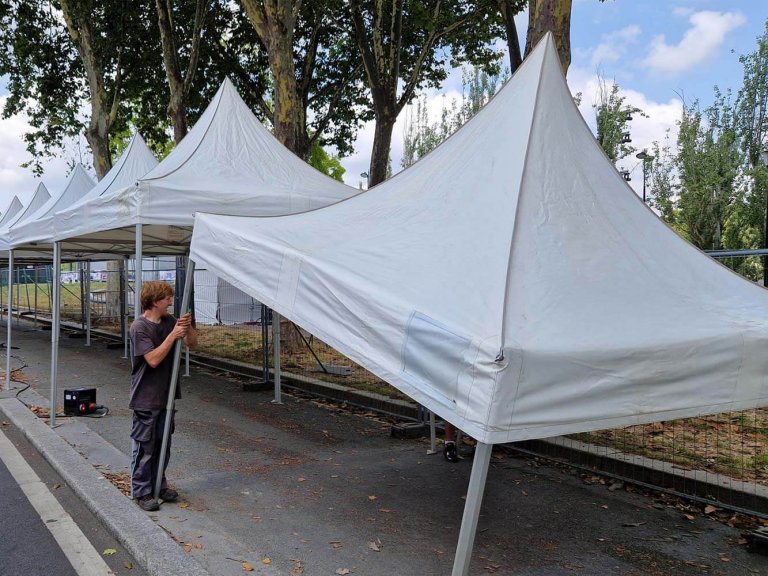
The dismantling of a professional gazebo must be considered as soon as conditions exceed the safe use of the structure or when the mandatory accessories are not installed.
For a V3 3×3 CTS stand, the reinforcement kit must be applied from Beaufort level 6, or the stand must be taken down. From Beaufort level 8, the CTS kit must be applied, or the tent must be taken down.
This point is particularly important for events open to the public. Safety depends not only on the sturdiness of the tent, but also on following assembly instructions, using the correct accessories, and monitoring weather conditions.
A robust professional gazebo is designed to withstand heavy use, but it must always be installed in accordance with the manufacturer’s recommendations.
Why does Vitabri conduct wind tunnel tests?
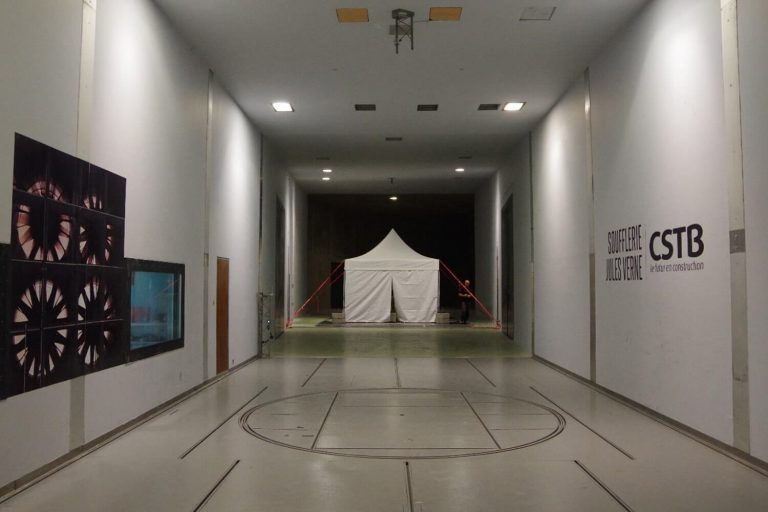
Wind resistance cannot be decreed: it must be designed, calculated, and tested. Our design office works on all the components of our folding tents: aluminum structure, plastic parts, fabric coverings, deployment systems, screws, and accessories.
To go further, we also conduct wind tunnel tests. Our folding tents are wind-tested at the Scientific and Technical Center for Building in Nantes. These tests allow us to verify the tents’ behavior under wind stress and to find the best balance between weight, strength, safety, and ease of assembly.
This approach is part of a continuous innovation strategy. The objective is to offer a reliable, durable, and professional gazebo adapted to the requirements of field users: local authorities, retailers, event organizers, sports clubs, emergency services, firefighters, armed forces, cafes, hotels, restaurants, and construction professionals.
What ballast weight should be used in practice?
For a professional folding tent, the best approach is never to focus solely on weight. The required weight depends on several factors: the size of the tent, the structural design, wind exposure, the presence of walls, the type of ground, the setup time, the number of people it will be used for, available accessories, and the expected weather conditions.
For a professional V3 3×3 CTS marquee, the ballast can range from 60 kg in total in light winds to several hundred kg in strong winds. As soon as the wind increases, external guying becomes essential, and then reinforcement kits or CTS should be used depending on the conditions.
If in doubt, it is best to reinforce the structure, remove the walls to reduce wind resistance, or fold down the stand. Safety must always take precedence over the continuation of the event.

Checklist before setting up a professional outdoor gazebo
Before assembly, always check:
- the weather forecast for the entire duration of use, including gusts;
- the nature of the soil: bitumen, concrete, grass, earth;
- the possibility of staking, guying or installing a permanent ground fixing;
- the presence or absence of walls, skirts, doors;
- the weight available for each foot and the distribution of the ballast;
- obligations related to welcoming the public, including CTS requirements;
- the general condition of the structure, canvas, feet, straps and accessories.
This quick check helps prevent assembly errors and ensures a more reliable installation.
Properly weighting your professional tent: a matter of safety and durability
The ballast weight of a professional marquee depends directly on the wind, the stand configuration, and the type of ground. For a V3 3×3 CTS marquee, recommendations range from 60 kg in total in light winds to 800 kg in the most exposed configurations with walls, guy wires, and a CTS kit.
But ballast is only one element of safety. A reliable installation also relies on staking where the ground allows, external guying, appropriate kits, adherence to assembly instructions, and the ability to fold the tent when weather conditions require it.
Choosing a Vitabri professional gazebo means benefiting from a folding tent designed for intensive use, tested against wind stresses and accompanied by clear recommendations for safe, durable use adapted to your terrain.